Your dog’s mouth is trying to tell you something. Most pet owners notice bad breath and assume it is harmless, but it is often one of the first signs of gum disease in dogs. Periodontal disease is the most common health condition seen in adult dogs, affecting an estimated 80% of dogs over age three. Left untreated, it does not stay in the mouth. Bacteria from infected gums can travel through the bloodstream and damage the heart, kidneys, and liver. That progression is preventable, but only if you catch it early. This article walks you through the warning signs, causes, and what to expect when your dog gets treatment. The earlier you act, the better the outcome for your dog.
What Are the Early Signs of Gum Disease in Dogs?
The earliest signs of gum disease in dogs are easy to miss. They show up gradually and rarely cause visible pain, which is why so many cases go undetected until the disease is advanced.
Watch for these signs, especially if your dog is over age three:
- Persistent bad breath: Not just “dog breath.” A strong, foul odor that does not improve between meals is a red flag.
- Red or swollen gums: Healthy gums are pink and firm. Redness along the gumline signals inflammation.
- Bleeding gums: Blood on a chew toy or in the water bowl is not normal. It points to gum irritation or early infection.
- Yellow or brown buildup on teeth: Plaque hardens into tartar within days. Heavy buildup indicates gum disease is likely already present.
- Excessive drooling: More saliva than usual, especially if it is tinged pink, warrants a closer look.
- Pulling away from face touching: Dogs with sore gums often resist having their muzzle or face handled.
Pet owners often tell us they assumed their dog’s bad breath was just part of owning a dog. In reality, chronic bad breath almost always has an underlying cause, and gum disease is at the top of the list.
Why Gum Disease Develops in Dogs
Understanding the cause helps you prevent it from coming back after treatment.
It starts with plaque, a soft film of bacteria that forms on teeth after every meal. If plaque is not removed regularly, it hardens into tartar within 24 to 72 hours. Tartar buildup pushes bacteria below the gumline, irritating the tissue and triggering inflammation. That inflammation is called gingivitis, and it is fully reversible at this stage.
If gingivitis is left untreated, it progresses to periodontitis, where the infection spreads to the bone and connective tissue holding the tooth in place. At this stage, bone loss occurs and teeth may loosen or fall out.
Certain dogs are more prone to dog gum disease symptoms than others. Small breeds have crowded teeth that trap food and plaque more easily. Brachycephalic breeds like bulldogs and pugs face similar crowding issues. Older dogs are at higher risk simply because plaque has had more time to accumulate. Diet and chewing habits also play a role, with soft-food-only diets accelerating buildup.
In our experience, many dogs we examine for loose or missing teeth already had significant bone loss that could have been prevented with earlier intervention.
How Veterinarians Diagnose and Treat Gum Disease
Diagnosis begins with a full oral exam. Your vet will check for tartar buildup, gum recession, pocket depth between the teeth and gumline, and any loose or fractured teeth. Because the most significant damage often occurs below the gumline, dental X-rays are typically needed to assess bone loss accurately.
Treatment depends on the stage of the disease. Here is what the process generally looks like:
- Pre-anesthetic bloodwork: Your vet checks organ function before any anesthesia is administered.
- General anesthesia: Thorough cleaning requires the dog to be still and calm. Anesthesia also allows the veterinarian to probe every tooth safely.
- Scaling and polishing: Plaque and tartar are removed from above and below the gumline using professional dental instruments.
- Dental X-rays: Images confirm whether bone loss is present and guide treatment decisions.
- Extractions if needed: Teeth that are too damaged to save are removed to eliminate pain and prevent further infection.
- Recovery and follow-up: Most dogs recover quickly and eat comfortably within a few days of the procedure.
Do not wait for obvious pain before scheduling a dental exam. Dogs instinctively mask discomfort, and by the time behavior changes, the disease is often already advanced.
Can Bad Breath in Dogs Be a Warning Sign?
Yes. Bad breath in dogs is almost always oral health-related. A dog’s breath should not be offensively foul on a regular basis. If you notice a persistent rotten or sour smell, it is one of the clearest indicators that bacteria are active in the mouth.
The misconception we hear constantly is that bad dog breath is normal. It is not. Healthy mouths do not produce that level of odor. The smell comes from anaerobic bacteria breaking down tissue below the gumline. The stronger and more persistent the odor, the further the disease has likely progressed.
There are other causes of bad breath worth ruling out, including kidney disease, diabetes, and gastrointestinal issues. But in a dog with no diagnosed systemic illness, foul breath almost always points back to the mouth. A dental exam is the right starting point.
Preventing Gum Disease and Protecting Your Dog’s Teeth
Prevention is far simpler than treatment, and it pays off significantly over your dog’s lifetime.
These steps make the biggest difference:
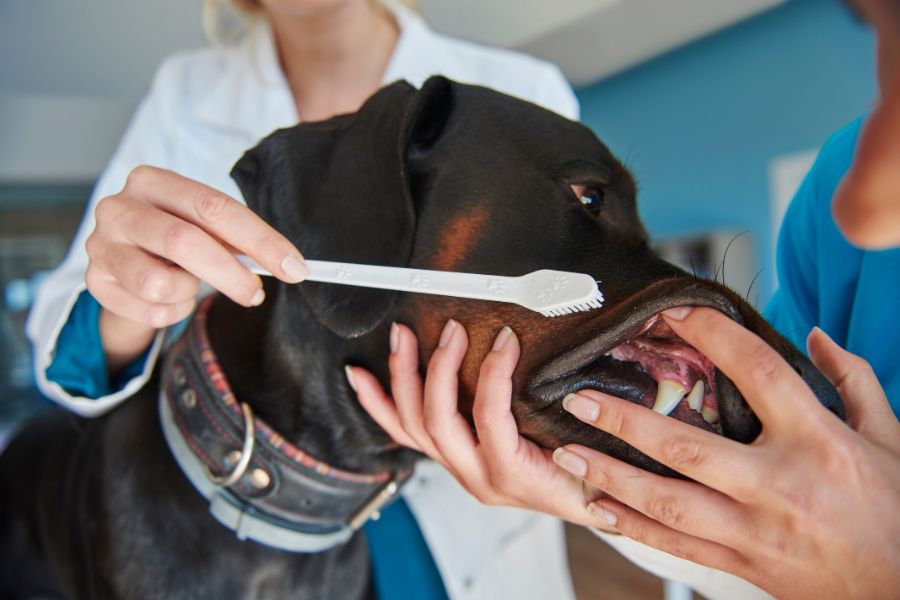
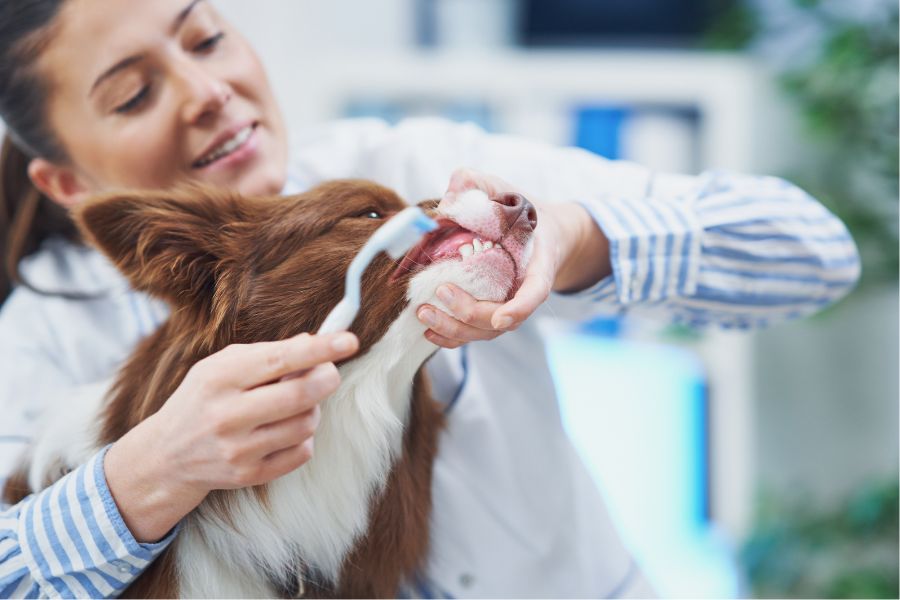
- Brush your dog’s teeth regularly: Even a few times a week slows plaque buildup meaningfully. Use toothpaste formulated specifically for dogs, never human toothpaste.
- Choose dental chews carefully: Look for products with the Veterinary Oral Health Council seal. Texture matters more than flavor.
- Add water additives or dental rinses: These reduce bacterial load between brushings without requiring cooperation from your dog.
- Feed a balanced diet: Kibble that requires chewing helps scrape some surface plaque compared to soft foods.
- Schedule annual oral exams: Your vet can spot early tartar buildup and recommend cleaning before disease takes hold.
Proper dental care for dogs is one of the most impactful things you can do for your dog’s long-term health. The mouth connects directly to the rest of the body. Dublin Veterinary Hospital reminds every client that prevention costs far less, in time and money, than treating advanced periodontal disease.
Conclusion
Gum disease in dogs moves fast and stays hidden. Knowing the signs of gum disease in dogs gives you the advantage of catching it before it reaches the bone. Watch for bad breath, red gums, visible tartar, and any changes in how your dog chews or reacts to face handling. A professional dental exam is the only way to see what is happening below the gumline. At Dublin Veterinary Hospital, we help dog owners understand exactly what their pet needs and when. Do not wait until your dog is in pain to take oral health seriously. Book an appointment today.
Frequently Asked Questions
Q: What does gum disease look like in dogs?
Ans: Gum disease in dogs typically appears as red or swollen gums, yellow or brown tartar buildup along the teeth, and bleeding when chewing. Bad breath that does not go away is also a consistent sign.
Q: Can gum disease in dogs be reversed?
Ans: Early-stage gum disease, called gingivitis, is fully reversible with a professional dental cleaning and consistent home care. Advanced periodontitis with bone loss cannot be reversed, but it can be managed and slowed.
Q: How often should dogs get their teeth cleaned by a vet?
Ans: Most dogs benefit from a professional dental cleaning once a year. Some breeds or dogs with a history of dental disease may need more frequent cleanings. Your veterinarian will recommend the right schedule for your dog.
Q: Is dog bad breath a sign of gum disease?
Ans: In most cases, yes. Persistent foul-smelling breath in dogs is one of the earliest and most reliable indicators of bacterial buildup in the mouth. It should be evaluated by a veterinarian rather than dismissed as normal.
Q: Can I prevent my dog from losing teeth due to gum disease?
Ans: Yes, with early intervention. Regular brushing, dental chews, and annual professional cleanings significantly reduce the risk of dental care for dogs becoming a serious issue. The earlier gum disease is caught, the better the chance of saving affected teeth.