Keeping your pet’s nails in good shape is more important than many people realize. When nails get too long, they can cause discomfort, affect the way your pet walks, and even lead to long-term joint issues, especially in active or older animals. This guide covers simple, safe nail care tips, including how to handle trimming at home and what to watch for during routine paw checks. Whether you’re a new pet owner or simply want to make grooming easier, you’ll find practical advice to keep your pet comfortable, confident, and moving happily.
Why Nail Care Matters for Every Pet
Nail maintenance is more than cosmetic — it’s a vital part of your pet’s overall wellness. When nails grow too long, they can curl, split, or press into paw pads, creating discomfort. Pets may adjust their gait to compensate, which can lead to unnecessary strain on joints and tendons.
Regular nail care helps:
- Prevent painful breaks and splits
- Reduce posture and alignment issues
- Improve traction on floors
- Support long-term mobility, especially in senior pets
If your pet avoids walking, hesitates on certain surfaces, or seems uncomfortable standing, their nails may be part of the problem.
How Often Should You Trim Your Pet’s Nails?
Most pets need nail trims every 3–4 weeks, but frequency depends on breed, size, activity level, and lifestyle. Indoor cats may wear down their nails slower, while active dogs who walk on hard surfaces may need trims less often.
Signs it’s time for a trim:
- You hear clicking on hardwood or tile
- Nails start curving toward the paw pad
- Your pet slips or loses traction
- Walking becomes stiff or hesitant
For senior pets or those with arthritis, routine trimming is even more essential because long nails can further limit mobility.
Tools You Need for Safe Nail Trimming
Using the right tools makes nail trimming smoother and safer. High-quality equipment reduces stress for both you and your pet.
Essential Grooming Tools
- Guillotine-style clippers: Good for small dogs and cats.
- Scissor-style clippers: Effective for thick nails on larger dogs.
- Nail grinders: Useful for smoothing edges and avoiding sharp corners.
- Styptic powder or gel: Stops bleeding quickly if you accidentally nick the quick.
- Treats and calm rewards: Keep your pet relaxed and build positive associations.
Before trimming, always inspect the nail to locate the quick—a sensitive blood vessel you must avoid.
Step-by-Step Guide to Trim Pet Nails at Home
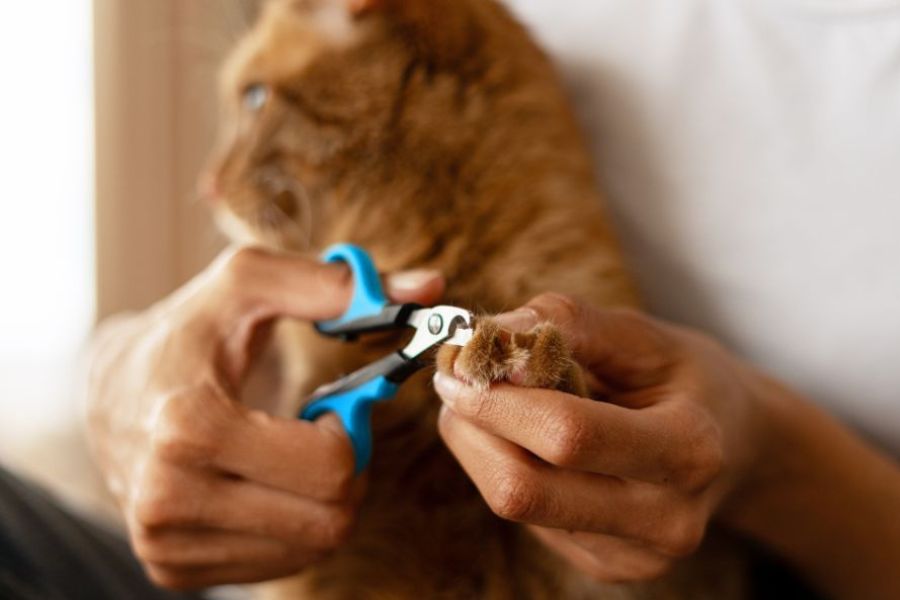
Learning how to trim pet nails at home can save time, reduce stress, and help you maintain healthy nails between professional grooming appointments.
Step 1: Get Your Pet Comfortable
Let your pet sniff the clippers or grinder. Reward with treats and keep the atmosphere calm. Nervous pets may need several short practice sessions before allowing a full trim.
Step 2: Position Your Pet Safely
For small pets, place them on your lap or a table.
Larger dogs can stand or lie comfortably on the floor.
Always choose a stable, well-lit setting.
Step 3: Identify the Quick
The quick is visible as a pink core inside light-colored nails.
For dark nails, trim small amounts gradually and look for a chalky white interior — a sign you’re close to the quick.
Step 4: Trim Slowly and Gently
Start with tiny cuts. Avoid large snips to reduce the chance of pain or bleeding. For grinders, apply gentle pressure for a few seconds at a time.
Step 5: Smooth and Reward
After trimming, use a grinder or emery board to smooth rough edges.
Always praise and reward your pet to reinforce cooperation.
Pet Nail Care Tips for Dogs and Cats
Every species has different nail care needs. Understanding your pet’s anatomy ensures safer grooming.
Nail Care Tips for Dogs
- Walks on concrete naturally file nails down.
- Keep dewclaws in check—they often grow faster and curve inward.
- For anxious dogs, try trimming nails after exercise when they’re calmer.
- Teach your dog to tolerate paw handling from a young age.
Nail Care Tips for Cats
- Cat nails naturally retract, so inspect them often.
- Provide scratching posts to help wear down nails.
- Trim every 2–3 weeks to prevent accidental scratches.
- Older cats may have thicker, brittle nails requiring gentler trims.
When to Seek Professional Nail Trimming
Some pets simply won’t tolerate nail trims at home—and that’s okay. Professional groomers and veterinarians can help keep the process safe and stress-free.
You should seek expert help if:
- Your pet becomes aggressive or overly anxious
- You cannot see the quick clearly
- Nails are severely overgrown or growing into paw pads
- You worry about hurting your pet
For pets with medical conditions, such as arthritis or orthopedic concerns, a veterinary hospital near you can trim nails safely and comfortably.
Preventing Nail Problems Before They Start
Proactive nail care helps avoid injuries and chronic pain. Keep a routine, build positive habits, and observe your pet’s paws regularly.
Tips to maintain nail health:
- Inspect paws weekly for cracks, injuries, or swelling
- Create a consistent 3–4 week trimming schedule
- Combine trims with regular paw cleaning
- Use slow introductions for puppies and kittens
- Treat nail care as part of an overall grooming routine
Healthy nails support healthy movement, and healthy movement keeps your pet happy.
Conclusion
Keeping your pet’s nails short and healthy is essential for their comfort, mobility, and long-term wellness. With the right tools, gentle handling, and regular routines, you can make nail care stress-free for your dog or cat. And if you’re looking for trusted Pet Care in Perkasie, Dublin Veterinary Hospital is always here to provide compassionate, knowledgeable care tailored to your pet’s needs.
FAQs
Q1: How often should I trim my pet’s nails at home?
Ans: Most pets need nail trims every 3–4 weeks, but some may require more frequent care depending on activity level and nail growth.
Q2: What’s the safest way to trim pet nails if they have dark claws?
Ans: Trim very small amounts at a time until you see a chalky white center, which lets you know you’re approaching the quick.
Q3: How do I calm an anxious pet during nail trimming?
Ans: Use treats, start slow, and create positive associations. Short, frequent practice sessions help reduce stress over time.
Q4: Are nail grinders better than clippers?
Ans: Grinders are great for smoothing rough edges and reducing the chance of cutting the quick, especially for thick nails.
Q5: When should I get professional help for nail trimming?
Ans: Anytime your pet is fearful, aggressive, or has severely overgrown nails, it’s safer to seek a veterinarian or groomer for assistance.