If you’ve ever wondered, “Why does my cat bite me?” you’re not alone. Many pet owners experience this confusing behavior, especially when it seems to come out of nowhere. Understanding why cats bite their owners is key to building a safer and more trusting relationship with your feline friend. In this guide, we’ll break down the most common reasons behind cat biting behavior and what those bites actually mean, so you can respond the right way.
What Does It Mean When a Cat Bites You?
Cats use biting as a form of communication. Unlike dogs, they don’t always rely on vocal cues. So when a cat bites their owner, it’s often their way of expressing something, whether it’s fear, overstimulation, or even affection.
Understanding cat biting behavior starts with observing context. Ask yourself:
- What was happening right before the bite?
- Was your cat playing, resting, or being petted?
- Did you notice body language signals?
Recognizing these patterns helps decode what your cat’s biting means and prevents future incidents.
1. Overstimulation During Petting
One of the most common reasons a cat bites their owner is overstimulation.
Cats enjoy affection but only to a certain point. When petting goes on too long or touches sensitive areas, they may suddenly bite as a warning.
Signs of overstimulation:
- Tail flicking or lashing
- Ears turning sideways or backward
- Sudden skin twitching
- Dilated pupils
What to do:
Stop petting as soon as you notice these signs. Shorter, gentler interactions can help avoid triggering a bite.
2. Play Aggression
If your cat tends to bite during playtime, it’s likely engaging in play aggression. Kittens especially learn hunting behaviors through biting and pouncing.
When hands or fingers are used as toys, cats may associate them with prey, leading to biting.
Common triggers:
- Rough play with hands
- Lack of proper toys
- High energy levels
How to manage it:
- Use wand toys or laser pointers instead of hands
- Schedule regular play sessions
- Redirect biting behavior to appropriate toys
This is a key part of understanding cat biting behavior, especially in younger cats.
3. Fear or Stress Response
A frightened or stressed cat may bite as a defensive mechanism. This type of bite is often sudden and more intense.
Situations that may cause fear:
- Loud noises or unfamiliar environments
- New pets or visitors
- Forced handling or restraint
where seasonal changes or fireworks events can startle pets, fear-based biting is quite common.
What to do:
- Give your cat space
- Avoid forcing interaction
- Create a quiet, safe environment
If your cat bite me incidents seem linked to anxiety, reducing stressors is essential.
4. Redirected Aggression
Sometimes, your cat may be upset about something else but takes it out on you. This is known as redirected aggression.
For example:
- Seeing another animal outside the window
- Hearing unfamiliar sounds
- Being unable to reach a “target”
When the frustration builds up, your cat may lash out at the nearest person.
Prevention tips:
- Block visual triggers (like windows) if needed
- Avoid touching your cat when it’s visibly agitated
- Let your cat calm down before interacting
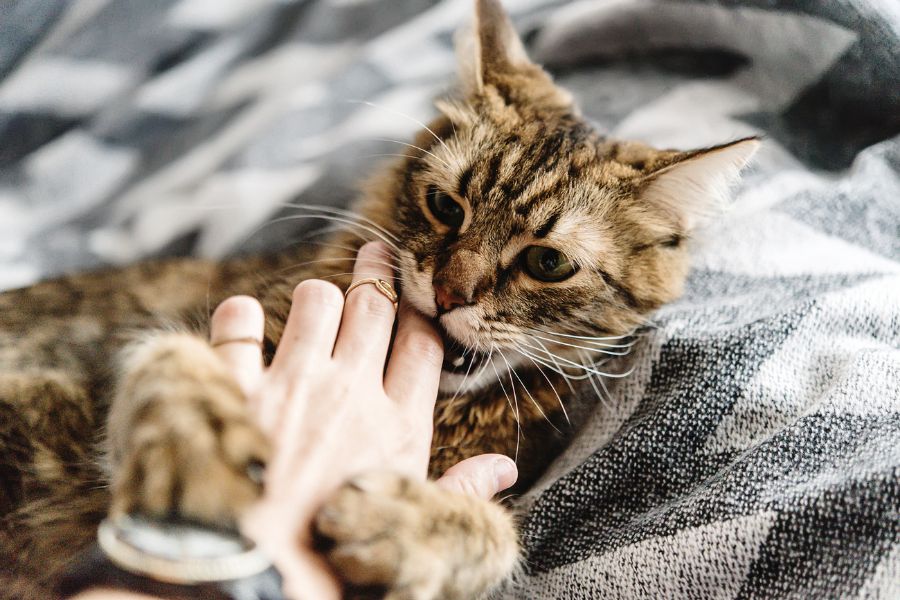
5. Love Bites (Yes, Really!)
Not all bites are aggressive. Some cats give gentle nibbles as a sign of affection often called “love bites.”
These bites:
- Are usually soft and controlled
- Happen during petting or cuddling
- Don’t break the skin
However, even affectionate bites can become problematic if they escalate.
How to handle it:
- Don’t encourage biting, even if it seems harmless
- Redirect with toys or gentle disengagement
- Reward calm, non-biting affection
Understanding the difference between playful and aggressive biting is crucial when analyzing what your cat biting means.
When Should You Be Concerned About Cat Bites?
While occasional biting is normal, some situations require attention.
Watch for:
- Frequent or unprovoked biting
- Deep bites that break the skin
- Signs of infection (redness, swelling, pain)
Cat bites can lead to infections due to bacteria in their mouths. If your cat bites their owner deeply, it’s important to clean the wound and seek medical advice if needed.
How to Prevent Your Cat from Biting
Preventing biting starts with understanding and consistency.
Practical tips:
- Learn your cat’s body language
- Avoid rough play with hands
- Use positive reinforcement (reward calm behavior)
- Provide mental and physical stimulation
- Stick to routines to reduce stress
Local pet owners often find that structured playtime and environmental enrichment significantly reduce biting behavior.
Training Your Cat to Stop Biting
Training a cat requires patience — punishment doesn’t work and may worsen the problem.
Effective training strategies:
- Immediate withdrawal: Stop interaction when biting occurs
- Redirect behavior: Offer toys instead of hands
- Consistency: Everyone in the household should follow the same rules
- Reward good behavior: Treats or praise when your cat remains calm
Over time, your cat will learn that biting doesn’t lead to attention but calm behavior does.
When to See a Veterinarian
If you are a cat owner in Perkasie and your cat’s biting behavior suddenly changes or becomes aggressive, it could indicate an underlying issue such as pain or illness.
A professional evaluation can rule out medical causes and provide behavior guidance. Clinics like Dublin Veterinary Hospital offer comprehensive care to address both physical and behavioral concerns in cats.
Conclusion
If you’ve been asking, “Why does my cat bite me?”, the answer lies in understanding your cat’s communication style. Whether it’s overstimulation, play aggression, fear, or even affection, each bite has a reason behind it.
By learning your cat’s signals and responding appropriately, you can reduce biting incidents and strengthen your bond. If biting becomes frequent or concerning, don’t hesitate to seek professional help. For expert guidance and personalized care, consider scheduling a visit with Dublin Veterinary Hospital today.
FAQs
Q1: Why does my cat bite me while purring?
Cats may give gentle “love bites” while purring as a sign of affection or slight overstimulation during petting.
Q2: Is it normal for cats to bite their owners?
Yes, occasional biting is normal, especially during play or communication, but frequent or aggressive biting should be addressed.
Q3: How do I stop my cat from biting my hands?
Avoid using your hands as toys and redirect your cat to appropriate toys during playtime.
Q4: Are cat bites dangerous to humans?
Yes, deep cat bites can cause bacterial infections, so proper cleaning and medical attention may be necessary.
Q5: Can stress cause my cat to bite me?
Yes, stress or anxiety can trigger defensive biting, especially in unfamiliar or overwhelming situations.