Your senior pet deserves the same love and attention they gave you for years. But as pets age, their health needs change faster than most owners expect. A dog or cat that seemed perfectly healthy at their last yearly checkup can develop a serious condition within just a few months. Pet owners bring in a dog that “seemed fine last week” and we find early-stage kidney disease or a heart murmur that needs immediate attention. Senior pet vet visits are the single most effective tool for catching these problems early. Annual exams that worked well for a younger pet simply are not frequent enough once they reach their golden years. This article explains why twice-yearly visits matter, what changes to watch for at home, and how staying proactive keeps your aging pet comfortable and healthy for longer.
How Age Changes Your Pet’s Health Needs
Dogs and cats age much faster than humans. A dog is considered senior around age seven. Smaller breeds may reach that milestone later, while larger breeds get there sooner. Cats are generally considered senior at age ten or older.
As pets age, their organ function, immune response, and metabolism all shift. Conditions like arthritis, diabetes, kidney disease, dental disease, and thyroid disorders become significantly more common. In our experience, many of these conditions develop quietly. Pets are natural at masking discomfort, which means by the time symptoms become obvious, the disease has already progressed.
Research widely cited by veterinary organizations suggests that roughly 80 percent of dogs show signs of periodontal disease by age three. By the senior years, dental disease can worsen quickly and affect organ health if left untreated. Older dog health checks catch these issues before they escalate.
What Happens During a Senior Pet Wellness Exam?
How often should senior pets see a vet? Veterinary experts at the AAHA recommend biannual wellness exams for senior dogs and cats, meaning two visits per year instead of one.
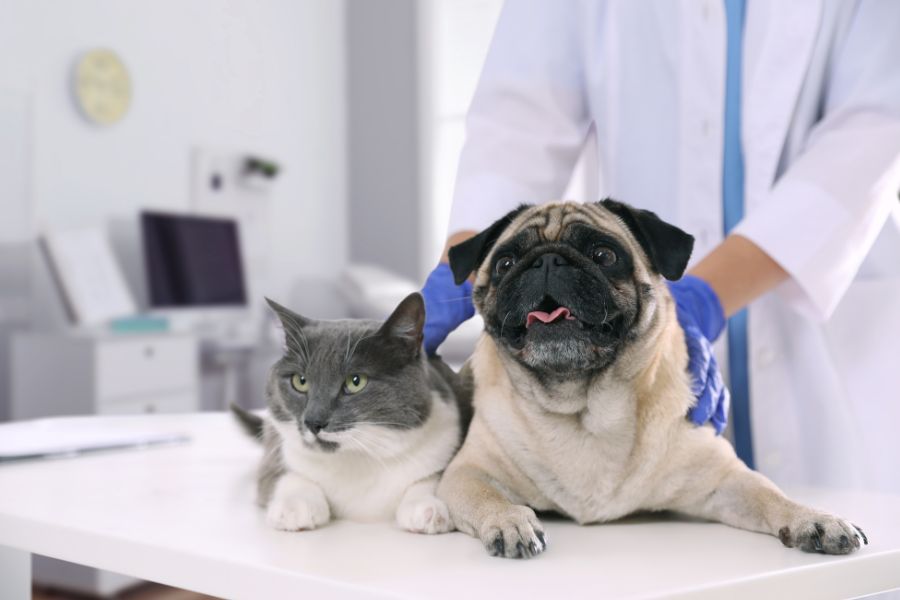
A senior pet wellness exam covers more ground than a standard annual checkup. Here is what your veterinarian typically assesses during each visit:
- Physical examination covering eyes, ears, teeth, skin, coat, and lymph nodes
- Weight and body condition scoring to detect unexpected loss or gain
- Blood and urine testing to evaluate kidney, liver, and thyroid function
- Blood pressure measurement is especially important for senior cats
- Joint mobility assessment to identify early arthritis or stiffness
- Dental evaluation to check for disease, pain, or infection
- Behavioral and cognitive screening for signs of cognitive dysfunction syndrome
- Vaccination and parasite prevention review based on your pet’s current lifestyle
These tests together give your veterinarian a clear picture of your pet’s internal health. Many of the conditions found during these exams have no visible symptoms in the early stages.
Signs of Illness in Senior Pets to Watch For at Home
Knowing what to look for between visits is just as important as the visits themselves. Aging cat care tips always start here: pay close attention to changes in daily habits, because small shifts often signal something larger.
Watch for these warning signs in senior dogs and cats:
- Increased thirst or urination. This is one of the most common early signs of kidney disease or diabetes in older pets.
- Unexplained weight loss. Even when appetite seems normal, weight loss in seniors often points to hyperthyroidism in cats or organ disease in dogs.
- Reduced activity or reluctance to climb. Stiffness after rest or hesitation on stairs can signal arthritis or joint pain.
- Changes in litter box behavior. Accidents outside the box, straining, or blood in urine all require prompt attention.
- Bad breath or difficulty eating. Dental pain is common in seniors and often goes unnoticed until a pet stops eating normally.
- Confusion, disorientation, or restlessness. These may point to cognitive dysfunction, a condition similar to dementia in humans.
If you notice any of these signs, contact your veterinarian promptly. Pet owners often tell us they waited weeks before calling because they assumed the behavior was “just aging.” In many cases, what they described was a treatable condition that responded well once we caught it early.
Why Twice-Yearly Visits Are Worth It
One of the most common questions we get from pet owners is whether twice-yearly exams are really necessary. The answer is yes, and the math supports it.
A year in a senior pet’s life is roughly equivalent to four to seven human years. A lot of health changes can happen in that span. Annual exams leave a long window where conditions can develop and worsen without detection. Biannual visits cut that window in half and give your veterinarian a baseline to compare against. Signs of illness in seniors are far easier to manage when caught at stage one instead of stage three.
Many pet owners are surprised to learn that early-stage kidney disease, caught through routine bloodwork, can be managed with diet and medication for months to years. When the same condition is found after symptoms appear, the treatment options are often more limited and more expensive.
Aging cat care tips from experienced veterinarians consistently point to one universal truth: proactive care is always more effective and less costly than reactive treatment.
How to Support Your Senior Pet Between Visits
Frequent vet visits work best when paired with attentive daily care at home. Here are practical steps that make a real difference for aging dogs and cats:
- Monitor weight weekly. A kitchen scale works well for small pets. Log the number so you can spot trends over time.
- Maintain a consistent routine. Senior pets are sensitive to stress. Regular feeding times, sleep schedules, and gentle exercise reduce anxiety and support organ health.
- Provide joint-friendly accommodations. Orthopedic beds, ramps instead of stairs, and non-slip flooring help arthritic pets stay comfortable and mobile.
- Feed a senior-appropriate diet. Nutritional needs change with age. Ask your veterinarian about food formulated for kidney support, weight management, or joint health.
- Keep dental care consistent. Daily tooth brushing is ideal, but even a few times per week significantly slows the progression of dental disease.
We frequently remind our clients that the goal of senior care is not just longer life. It is a better quality of life every year your pet is with you. Dublin Veterinary Hospital is here to help you navigate that journey with your pet at every stage.
Conclusion
Senior pets bring a depth of companionship that only comes with years together. Protecting their health in their later years is one of the most meaningful things you can do for them. Senior pet vet visits twice per year allow your veterinarian to catch problems early, adjust care as your pet’s needs evolve, and keep your aging companion comfortable. Do not wait for symptoms to appear before scheduling. In Perkasie, PA, and the surrounding area, proactive senior care makes a measurable difference in outcomes. If your dog or cat is seven or older, it is time to move to a twice-yearly schedule. Your pet cannot tell you when something hurts. Regular exams make sure nothing goes unnoticed. Book an appointment today.
Frequently Asked Questions
At what age is a pet considered senior?
Ans: Most dogs are considered senior around age seven, though large and giant breeds often reach senior status closer to age five or six. Cats are generally considered senior at age ten. Your veterinarian can help you determine the right care schedule based on your specific pet’s breed, size, and health history.
Why do senior pets need to go to the vet more often than younger pets?
Ans: Senior pets age much faster than humans. A single year represents several years of biological change for a dog or cat. Conditions like kidney disease, diabetes, arthritis, and dental disease develop quickly and show few early symptoms. Twice-yearly exams allow your vet to catch and treat problems before they become serious.
What blood tests are done during a senior pet wellness exam?
Ans: A typical senior wellness panel includes a complete blood count, a chemistry profile to assess organ function, a thyroid test, and a urinalysis. These tests evaluate kidney health, liver function, blood sugar, red and white blood cell counts, and more. Your vet will recommend the right panel based on your pet’s age and history.
Can I skip a senior vet visit if my pet seems healthy?
Ans: It is not recommended. Many serious conditions in senior pets have no visible symptoms in the early stages. Waiting until your pet seems unwell means the condition has likely already progressed. Routine biannual visits catch disease during the most treatable window, even when your pet appears perfectly fine at home.
How much does a senior pet wellness exam typically cost?
Ans: Costs vary depending on the clinic and which diagnostics are included. A senior wellness exam that includes bloodwork and urinalysis generally costs more than a standard annual visit. However, early detection almost always reduces long-term treatment costs significantly. Ask your veterinary team about what is included and whether a senior wellness package is available.